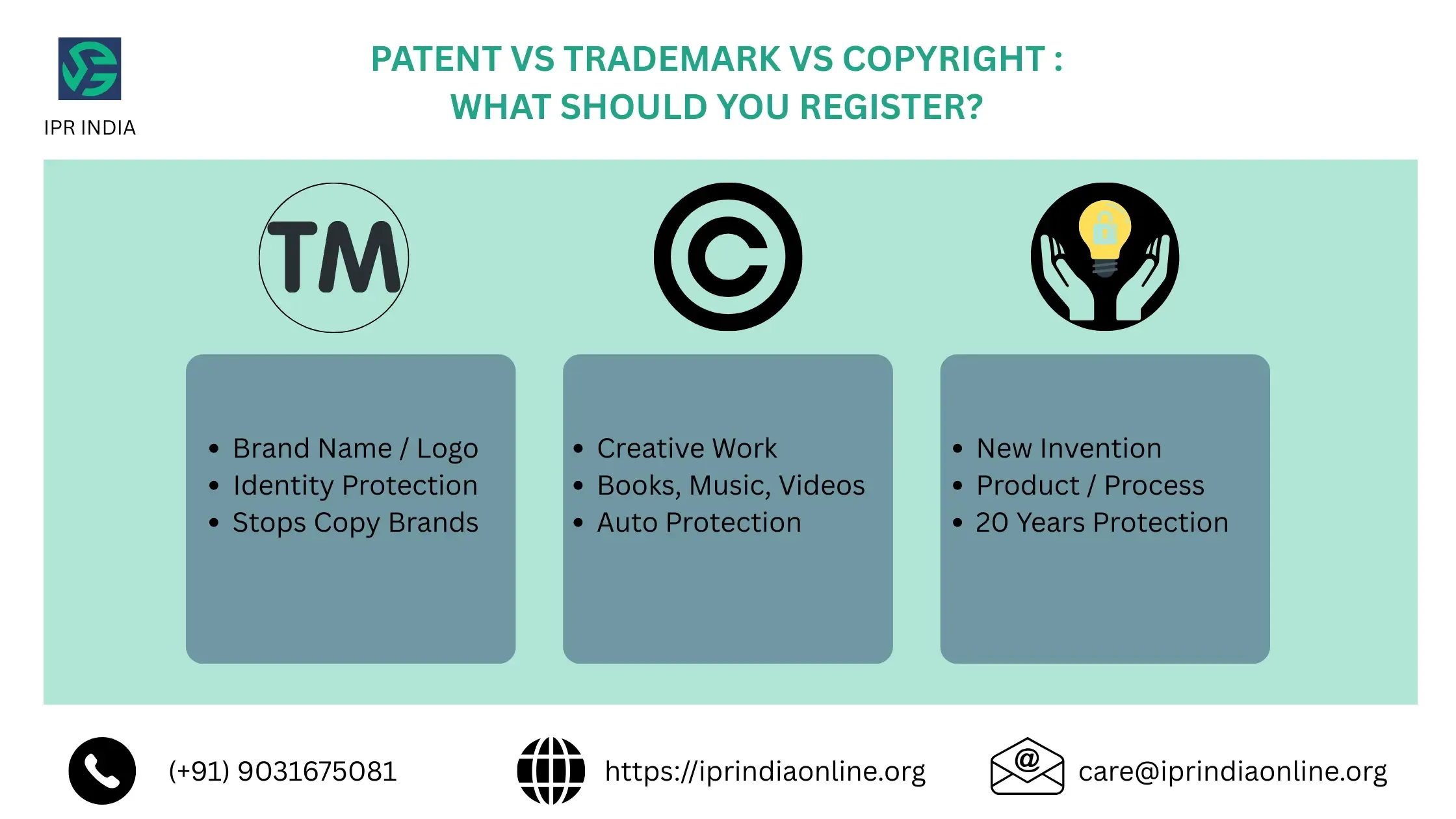
Patent vs Trademark vs Copyright: What Should You Register in India?
Starting a new business or inventing something new - what should be protected the most? So many founders, creators, and makers get confused about patents vs. trademarks vs. copyrights. They sound the same — but they’re entirely different things.
If you are going to protect your business through legal means, it is essential that you know the correct priority for protection. There are plenty of up-and-coming brands that, for them, deciding on the right stage to register trademark online is a step in the right direction to solidify their name in the field.
So, can we just simplify everything with this simple, easy-to-understand yes or no question?
Why Is Protection of Intellectual Property Important?
The assets of your business aren’t just physical goods. Your brand name, logo, invention, content, design, and technology are important assets too. If you don’t own them legally, someone else can copy or abuse them.
Intellectual property protection helps you:
- Establish legal ownership
- Prevent unauthorized use
- Build long-term business value
- Gain investor confidence
- Expand safely in the market
But the real question is — which protection should come first?
When a Patent Should Be Your Priority
A patent is meant for inventions. It is applicable to seek patent protection if you have invented something technical, new, or unique from a functional perspective.
For example:
- A new machine
- A unique manufacturing process
- A software-based technical solution
- A medical or engineering innovation
If your competitive advantage lies in how something works, then protecting that functionality becomes important before launching it publicly. Filing early is crucial because once your invention becomes public, your chances of protection can be reduced.
Patent protection provides you the right to exclude others from making, using, selling, and importing your invention for a limited time in exchange for public disclosure of the invention.
But there is no patent protection for your brand name or logo. That is where trademark protection comes in.
When Trademark Protection Becomes Essential
If your focus is on building a brand in the market, your business name and logo are your identity. Customers recognize you through your brand — not through your internal processes.
In these instances, protecting your brand by registering a trademark is essential.
You may want to consider trademark protection if:
- You are launching a startup
- You have created a unique brand name
- You designed a logo or tagline
- You plan to scale nationally or internationally
- You want exclusive rights over your brand
In the absence of protection, a third party can register a similar name and mislead the market. That can damage your reputation and customer trust.
For most service or product-based startups, trademark protection is often the first legal step because brand recognition typically comes before product innovation.
When Copyright Is the Right Answer
Copyright protection extends to original creative works. This includes:
- Books and articles
- Website content
- Music and videos
- Graphic designs
- Software code
- Marketing materials
If your business is in the content production or creative expression industry, copyright registration will enhance your legal position in the event of a dispute.
Copyright, unlike patents, does not protect the ideas. It protects the expression of ideas. For example, you cannot copyright a business concept, but you can protect the written content explaining that concept.
How to Decide What to Register First
Rather than comparing them side-by-side, ask yourself one simple question:
What gives my business its main value right now?
- If your brand name is your biggest asset, then protecting your brand identity should be your first step.
- If your innovation is your main advantage, then it's essential to get patent protection before public disclosure.
- If your business is based on content or creativity, then copyright protection should not be ignored.
Many startups feel like they need all three right off the bat. That might be true in some instances, but it depends on what stage you are in.
Some Real-Life Examples for Better Clarity
Let's say you start a tech company:
- You develop a new software tool (innovation)
- You make a brand name and logo
- You design website content and marketing materials
In this case:
- The software functionality may require patent protection.
- The brand name should be secured through trademark protection.
- The website and content can be protected through copyright.
Different assets require different protection layers.
Why Most Startups Register Trademarks First
In practical business scenarios, brand identity is usually the first thing customers see. Your company name is included on your invoices, social media, ads, and packaging.
You might have to rebrand entirely if someone else snags a name that’s too close to yours. Rebranding takes a toll on finances, time, and public image.
So it is no surprise that many early-stage companies focus on getting their trademark registered to protect their identity in the market, at least before they start operations.
Legal Matters to be Dealt with after Registration
At the same time, in certain cases, applications may be opposed, amended, or challenged. In such cases, trademark rectification proceedings, including cancellation and revocation, can be initiated to correct the trademark register.
Knowing the rules of law ahead of time can save you from unnecessary headaches down the line.
Your filings are professionally reviewed so they are correct and consistent with your long-term business strategy.
Common Misconceptions
- Copyright protects brand names — it does not.
- Patent protects logos — it does not.
- Registering a domain name gives legal ownership — it does not.
Each form of protection serves a particular function. Don't confuse them and open your business up to risk.
Protect Smart, Not Just Fast
Intellectual property protection is not a matter of filing everything in a hurry. It’s about knowing what to protect at your current level.
Begin by assessing:
- What makes your business unique?
- What is easy for competitors to copy?
- What could be most damaging if it were to be misused?
Once you identify the most valuable asset, then go to work protecting that first.
Conclusion
Patents, trademarks, and copyrights are different. Each of them covers a different part of your business.
- If you are strong in innovation, concentrate on patent protection.
- If your identity and brand recognition matter most, secure your brand legally.
- If your business is creative, defend your original work.
Most expanding companies find that their brand identity — the visual and verbal representation of their company, product, or service relating to what customers know and experience and how they feel about it — becomes the foundation for long-term success.
Locking down that identity at the right time can shield against legal disputes down the road and strengthen your position in the marketplace.
The right intellectual property protection today will ensure stability, exclusivity, and confidence as you continue to grow tomorrow.